
About DreamSight
I've built three businesses from nothing, and every system that ran them
I started multiple businesses from scratch and grew them into multimillion-dollar companies, building the ERP, the warehouse systems, the shipping, and the marketing along the way. There are very few problems a small business runs into that I haven't already had to solve for my own company. That experience is the backbone of everything I do for clients.
years of business and technology leadership
successful consulting engagements
companies founded and scaled
platform & architecture certifications
My relationship with technology started in middle school. I was gifted a computer and didn't have the money to buy the video games I wanted, so I taught myself to program in BASIC from a magazine subscription my parents bought me, and started writing my own games. That instinct, to build what I couldn't afford to buy, never really left me.
In the mid-nineties, I founded my first company. I had always been a 'computer kid' and was working at CompuServe at the time, so naturally my startup embraced 'newer' computer-driven workflows. When we needed graphic design for the apparel we were selling and couldn't hire it out, I taught myself from scratch and eventually became the company's art director. That same design sense shaped the interfaces I built for our ERP years later, and it still shapes the software I deliver today. Many of my competitors in the manufacturing business were resistant to new technology, and a few years later, all the dinosaurs in my industry who had not embraced computer technology were out of business. It was a lesson that technology investment is not optional for companies that want to survive.
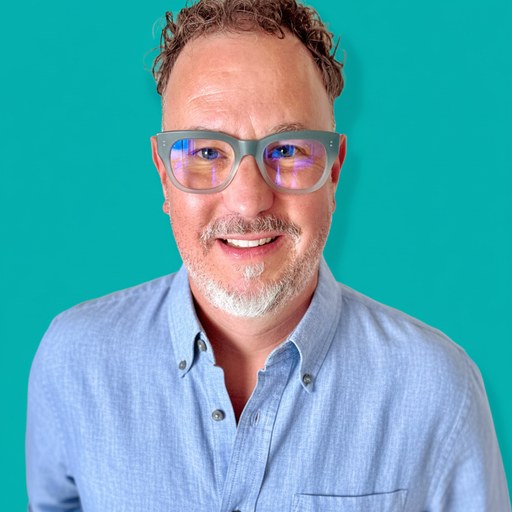
Mike Leibrand
Founder & CEO · Columbus, OH · Orlando, FL
DreamSight is a platform-agnostic technology practice focused on AI, process automation, and technology strategy for small and medium-sized businesses. It's built on the lesson my whole career taught me, that technology investment isn't optional, and on the judgment that comes from having already lived through the problems my clients face, then built the systems that solved them.
What I've built, from scratch
Not specced and handed off. Built. To run my own companies, I designed and wrote the core systems most businesses spend a fortune licensing, and I lived with the results every day.

A complete ERP
Order entry, A/R, inventory, and sales automation for two manufacturing companies, built to fit how we actually worked instead of bending the business to fit the software.
Warehouse management
Systems running hundreds of pick, pack, and ship orders a day, paperless, on the floor, with the bugs ironed out by the people using them.
A CRM
Customer records, sales pipeline, and service in one place, years before that was something you could just buy.
Marketing automation
Database-marketing and customer analytics decades before it became table stakes for everyone else.
Manufacturing process automation
Workflow engines that took make-to-order turnaround from two weeks to three days at 98.5% on-time.
An integrated shipping system
One system across carriers that cut mis-shipments by 95% and consolidated what used to be several disconnected tools.
A dunning and collections system
Automated the follow-up on money owed so cash kept moving without someone chasing it by hand.
Customer and vendor portals
Self-service websites so customers and suppliers could transact directly, without picking up the phone.
EDI and drop-ship
Wired our systems straight into customers and vendors for hands-off, end-to-end order flow.
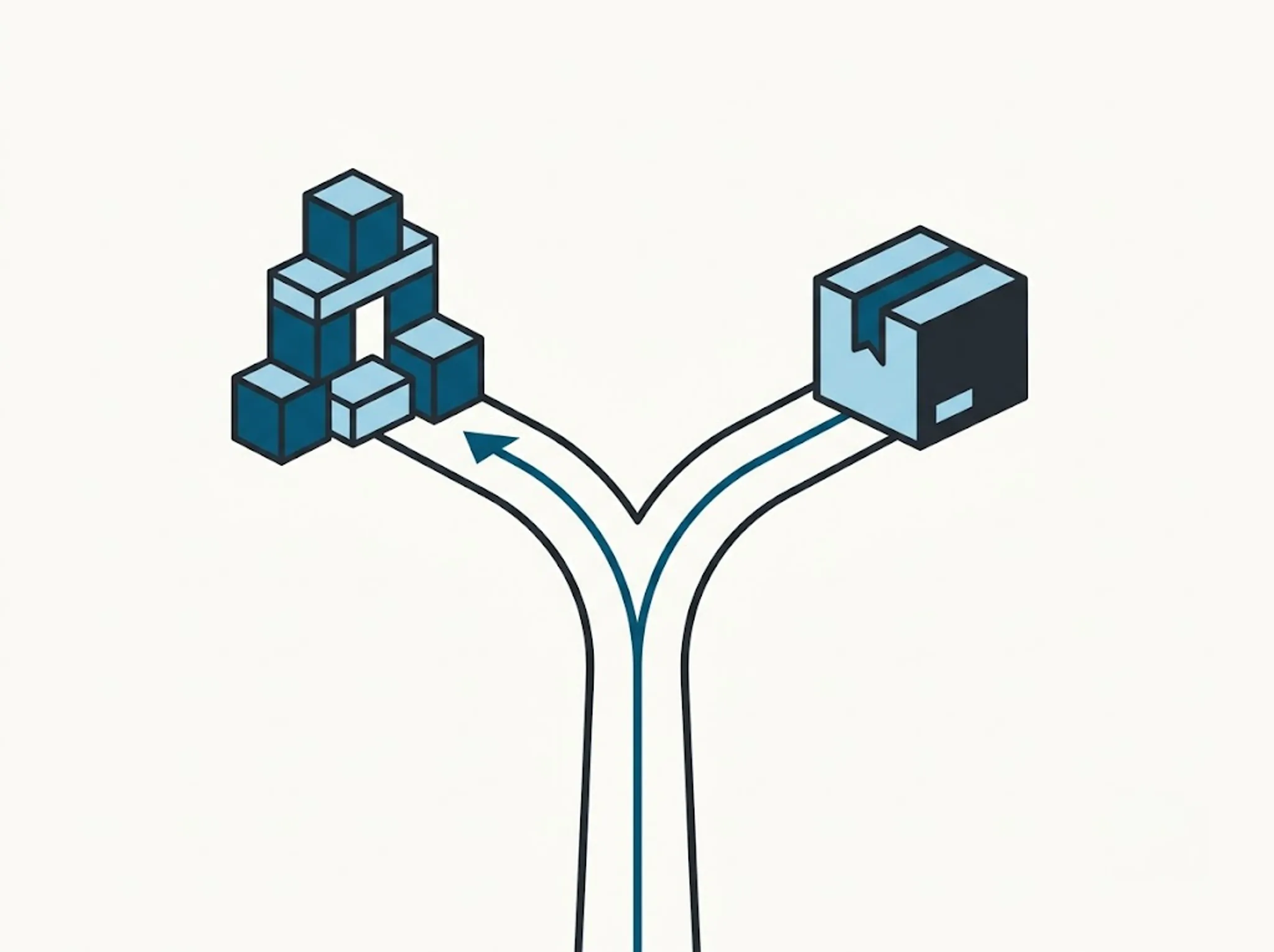
Build, or buy. The judgment to know which.
I'm not a custom-software evangelist. Over the years I've also scoped and bought off-the-shelf ERP, warehouse management, field service management, CRM, integration, and marketing automation solutions when that was the smarter call. What informed my own build-versus-buy decisions twenty-five years ago was budget first (and maybe a little hubris), and the hard truth that off-the-shelf rarely cleared more than half of what the business actually needed.
Having built these systems myself is exactly what lets me judge a product on the market honestly, because I know what it really has to do. My bias isn't toward building or buying. It's toward value. And as a business leader who got used to being paid last, presuming there was anything left, I watch your budget the way I learned to watch my own.
Who am I?
Act One: Building businesses on custom technology
I founded Ares Sportswear in 1994 and Dyenomite Apparel a few years later, and ran the two as sister companies for more than two decades, together about 200 employees and $25M in combined revenue. We scaled Ares into one of the Midwest's largest screen-printing and embroidery operations and grew Dyenomite into the largest tie-dye apparel manufacturer in the country, shipping more than a million made-to-order garments a year. While many competitors resisted technology, we leaned into it at every turn. I was the lead architect and product owner for the systems that powered that growth: custom ERP for order entry, CRM, A/R, and sales automation, and warehouse systems running hundreds of pick/pack/ship orders a day. We wired EDI into customers and vendors, built workflow engines that took make-to-order turnaround from two weeks to three days, and I even invented a machine that cut tie-dye labor by 80%. Building custom ERP and warehouse systems isn't something I picked up recently. It's what I've done my whole career. That is why NetSuite rescues and NetSuite-Shopify builds are my specialty today: I have already built, from scratch, the systems NetSuite replaces.
Act Two: Mastering platforms and automation
In 2016 I founded Summit Technologies, a Salesforce consulting partner, to do for other small businesses what I'd just spent two decades doing for my own: build the integrated systems they run on. I fell in love with how quickly you could build powerful, automated systems using low- and no-code tools. Over the next eight years I grew Summit to $3.5M in annual revenue and a 20-person team, delivering more than 250 digital transformation projects, and earning recognition as one of Columbus's largest IT consulting firms, a Best Place to Work, and a Fast 50 fastest-growing company. I became 14× Salesforce Certified (including two architect credentials), co-founded the regional Buckeye Dreamin' conference, and built a boot camp to train the next generation of consultants. The work spanned hundreds of small businesses, nonprofits, universities, and government organizations: replacing The International Cat Association's failing FoxPro system and clearing a three-month service backlog, cutting intake labor in half for The Ohio State University's College of Dentistry, and migrating decades of student data for The New School in New York, before I grew restless again.
Today: A focus on AI and strategic impact
In 2024 I stepped back from Summit to focus on researching and developing AI solutions for small and mid-sized businesses. The market is flooded with AI tools, and I've spent a great deal of time evaluating as many as possible to separate the legitimate solutions from the pretenders, while increasingly building custom solutions myself. That work became DreamSight: a platform-agnostic technology agency focused on AI, process automation, system integration, and technology strategy. The difference today is that AI lets one experienced architect deliver what used to take an entire team, which means custom software is finally cheaper than buying generic products and adapting your business to them.
I intend to focus on my passions: watching my beautiful granddaughters grow up and helping a select group of small businesses navigate a rapidly changing technology landscape. I believe that with the right insight and technology solutions, it is possible to thrive in an era that will see many businesses who don't evolve get left behind.
No phases. Everything is in scope.
For most of my career, delivering software looked the same way it does at every consulting firm. As an executive resource, I would surface the core business problem and outline how technology could solve it, then hand that plan to a technical architect, who worked with admins and developers, overseen by a project manager, to bring it to life. It almost always took multiple iterations and several phases, because doing everything at once was unrealistic. That structure is exactly why traditional projects cost what they cost and take as long as they take.
Today that whole chain collapses into one person and an AI team I've personally trained over hundreds of hours of real-world work. We don't break the work into phases. Everything is in scope. The proof of concept is generally complete, finished software, generated in a matter of days instead of the weeks or months it used to take. And with every project, I keep wringing more efficiency and value out of the system I've built, so each client benefits from every engagement that came before theirs.
I can be your IT department
I've worked with enterprise-scale organizations, but my preference is owner-led companies, often the ones with no IT leadership at all. With AI behind me, I can be that department, or significantly strengthen a thin one: the strategy, the build, the integration, and the day-to-day, delivered by one experienced architect at a fraction of what a full team used to cost. You get senior-level judgment that has already lived through your problems, on the platforms you already own, watching your budget like an owner. My virtual admin and developer services, overseen by me, give a budget-conscious business a senior architect plus an AI team for less than the cost of one full-time hire.
Ready to put technology to work for your business?
A 25-minute, zero-pressure call. We'll talk through where AI and automation will pay off fastest in your business. No obligation, no hard sell.